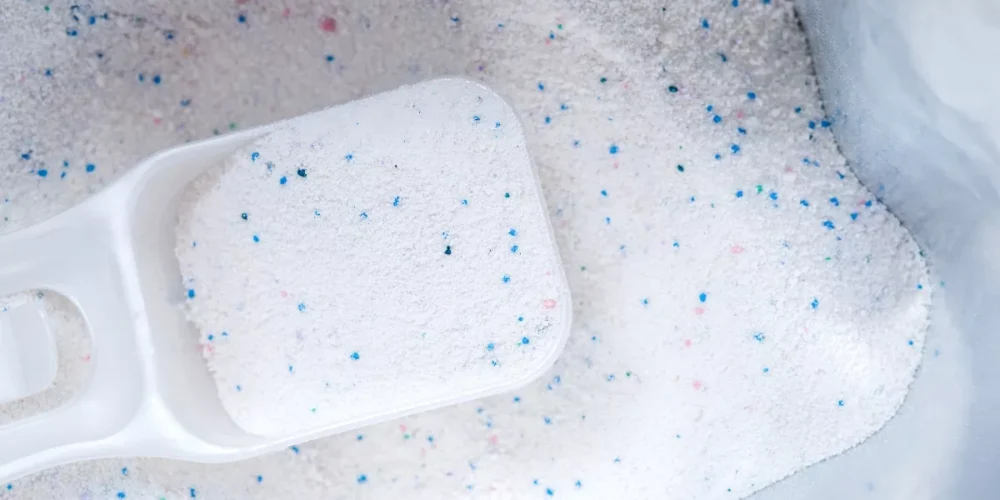
In household chemicals, product performance depends not only on the presence of surfactants. Equally important are the components that define the working environment of the entire formulation. One of the key parameters in many cleaning products is alkalinity. It supports the removal of contaminants, especially greasy soils, and influences the overall efficiency of the cleaning system.
For this reason, detergent formulations have long relied on raw materials that build or enhance this effect. Among the most important are sodium carbonate and sodium metasilicate. Both compounds hold an established position in household chemicals, and their relevance is driven not only by their chemical properties, but also by practical factors such as availability and commercial form.
Sodium carbonate in household chemicals
A versatile raw material used across a wide range of cleaning products
Sodium carbonate has long been one of the fundamental raw materials used in household chemicals. Among the components responsible for building alkalinity, it holds a key position due to its broad applicability and predictable performance in detergent formulations. This compound increases pH, supporting the removal of greasy soils and enhancing the effectiveness of surfactants. As a result, it is widely used across various cleaning product categories, from laundry detergents to multi-surface cleaners.
In laundry detergents, sodium carbonate helps create conditions that support soil dissolution and keep contaminants suspended in the wash solution. In surface cleaners, it contributes to the removal of organic residues and greasy deposits. At the same time, it works well with other formulation components, making it easy to incorporate into a wide range of product types.
Sodium metasilicate – a raw material for demanding applications
A component used in formulations designed to remove tough soils
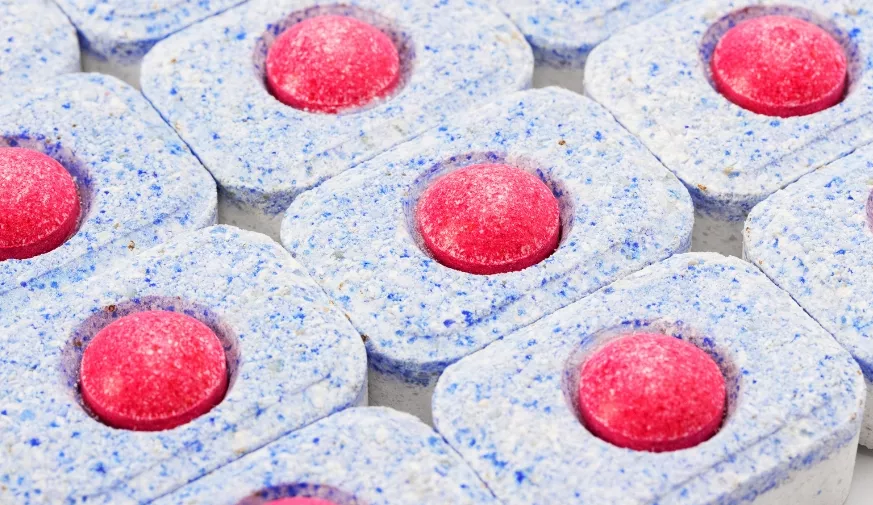
Sodium metasilicate is used in products designed for more demanding cleaning tasks. Unlike sodium carbonate, which serves as a base builder of alkalinity, it delivers stronger performance and enables higher pH levels in the formulation. As a result, it effectively supports the removal of tough soils such as grease, burnt residues, and deposits formed during intensive surface use.
For this reason, it is primarily used in products designed for cleaning kitchens, ovens, hoods, and industrial surfaces. This applies to both professional applications and selected high-performance household products. In these cases, the key factor is effectiveness under heavy soil loads rather than routine cleaning.
At the same time, sodium metasilicate acts as a complementary component within the alkaline system. It does not replace sodium carbonate, but enhances its performance and strengthens the overall effectiveness of the formulation in more demanding applications. In practice, this means it is used where a standard level of alkalinity is insufficient and higher cleaning efficiency is required.
Raw material form and the production process
The importance of physical form for transport, dosing, and use in production
The physical form of a raw material has a direct impact on the production process. Both sodium carbonate and sodium metasilicate are supplied in solid form, which facilitates dosing and integration with other formulation components. They are used in both powder products and formulations prepared as aqueous systems.
At the same time, they differ in process behavior. Sodium carbonate is characterized by fast and predictable dissolution, which supports its use in large-scale production. Sodium metasilicate also dissolves in water; however, its behavior may vary depending on its physical form and storage conditions. In practice, this means it requires greater control during dosing and formulation preparation.
Storage requirements ensuring raw material stability and quality
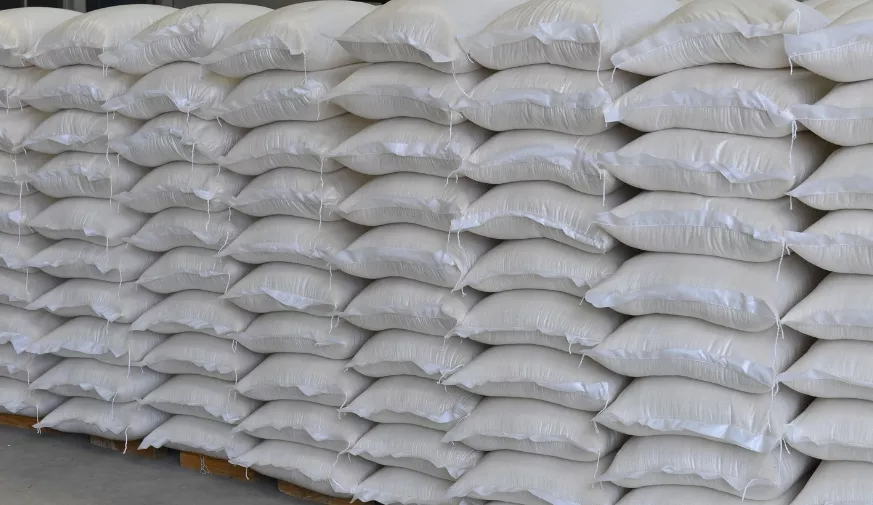
Sodium carbonate and sodium metasilicate are most commonly supplied in 25 kg bags, stacked on pallets and secured with stretch wrap. This form of packaging facilitates transport and warehouse organization, while also supporting efficient inventory management in serial production.
Both raw materials require storage in dry conditions. Sodium carbonate exhibits moderate hygroscopicity, while sodium metasilicate is more sensitive to ambient moisture. In practice, exposure to moisture can lead to caking and a decline in functional performance. Therefore, maintaining appropriate storage conditions and protecting packaging from damage are essential.
Global supply structure of sodium carbonate and sodium metasilicate
Selecting a raw material for a detergent formulation is not only a matter of chemical properties or physical form. For household chemicals manufacturers, supply stability is equally important—and this depends directly on the structure of global supply.
In the case of sodium carbonate, the market is highly geographically concentrated. According to USGS data, in 2024 China, Turkey, and the United States accounted for a combined 81% of global soda ash production. This means that developments in just a few key countries can directly affect the availability of this raw material in Europe—both in terms of pricing and lead times.
Sodium metasilicate has a slightly different market structure. According to 2024 data, Asia-Pacific accounted for nearly 45% of global sales of sodium metasilicate pentahydrate, while the detergents and soaps segment generated almost half of the total market revenue. Household chemicals therefore remain one of the main application areas for this raw material, which translates into steady demand and competition for available volumes.
Understanding these dependencies has practical value in procurement planning. Manufacturers who know where a raw material comes from and how its global supply is structured are better prepared for potential disruptions and can respond to market changes at an earlier stage.
Źródła:
- U.S. Geological Survey (USGS), Mineral Commodity Summary: Soda Ash, 2025
- Mordor Intelligence, Sodium Metasilicate Pentahydrate Market Report, 2024