
Magnesium – the key to efficient nitrogen utilisation
The efficiency of nitrogen fertilisation largely depends on the overall condition of the soil. A magnesium deficiency limits the rate of photosynthesis, which reduces plant biomass growth. Since magnesium is a component of chlorophyll, it plays a key role in capturing solar energy and activates enzymes responsible for nitrogen metabolism. An insufficient magnesium supply leads to slower protein synthesis and lower yields, even with high nitrogen fertilisation levels.
In agricultural crops, deficiencies of magnesium and sulfur often occur simultaneously. Symptoms of nutrient deficiency may include leaf yellowing, slowed growth, and reduced yield quality and volume. That is why a rapid response and the supply of macronutrients in a readily available form are essential.
Magnesium sulfate heptahydrate – a source of magnesium and sulfur
In intensive agricultural production, traditional magnesium fertilisers are often insufficient. In such cases, magnesium sulfate heptahydrate is a highly effective solution. It is a dual-component fertiliser in crystalline form, providing both magnesium and sulfur. Thanks to its high solubility in water, magnesium sulfate heptahydrate is easy to use in various application methods. It penetrates the soil quickly and delivers essential macronutrients to plants without delay.
Magnesium sulfate is characterised by a high magnesium content, typically expressed as magnesium oxide (MgO equivalent). It also contains sulfur in the form of sulfur trioxide (SO₃). As a result, it effectively corrects magnesium deficiencies. Magnesium sulfate improves photosynthetic efficiency, enhances nitrogen utilisation, supports plant resistance, and promotes proper root system development. Importantly, this fertiliser does not acidify the soil and is also suitable for soils deficient in magnesium.
Applications in agriculture and horticulture
As an inorganic mineral fertiliser, magnesium sulfate heptahydrate is used across a wide range of crops:
- For cereals – increases grain filling and improves quality.
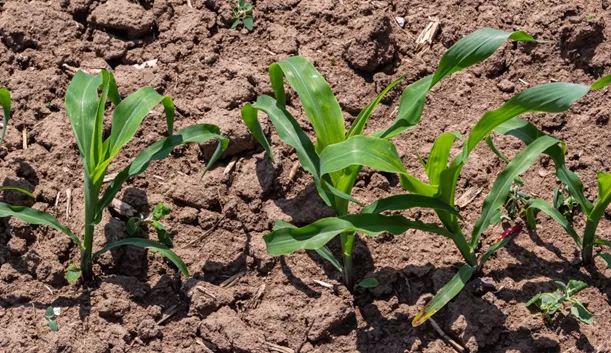
- For maize – supports leaf development and protein content.
- For strawberries – enhances flavour and fruit uniformity.
- For tomatoes – reduces chlorosis and improves colour development.
In both granular and crystalline forms, it is easy to dose. It is most commonly applied as a soil fertiliser in solution or as a foliar fertiliser in spray form. In fertigation systems or when using sprayers, a magnesium sulfate solution at the appropriate concentration is used to irrigate and nourish plants simultaneously. Such a water-soluble fertiliser performs well in agricultural production.
In addition, magnesium sulfate is widely used in gardening—from greenhouse and hydroponic cultivation to ornamental plants.

Magnesium sulfate heptahydrate – frequently asked questions
The most common symptoms include chlorosis and leaf yellowing, slowed growth, and reduced yield quality and volume.
It is best applied during periods of intensive plant growth—typically in spring and early summer—when the demand for magnesium and sulfur is particularly high.
Yes, thanks to its high solubility in water, it is widely used in foliar spraying, allowing for the rapid correction of nutrient deficiencies.
Yes, this fertiliser is fully water-soluble, which makes it well suited for use in fertigation and hydroponic systems.
The monohydrate form has a higher magnesium content per unit mass, but it dissolves more slowly. The heptahydrate dissolves faster, making it more suitable for rapid correction of deficiencies.
Yes, it is compatible with many fertilisers, including urea, which allows it to be used in foliar mixtures.
At Centro-Chem, we offer magnesium sulfate in the form of a white powder, packaged in 25 kg bags or big bags.
At Centro-Chem! For nearly 30 years, we have been supplying high-quality fertiliser raw materials to manufacturers and farms. We offer certified products, including ISO and REACH compliance. To receive a tailored offer, contact our Sales Department: handel@centro-chem.pl