Detergent formulations rely on the interaction of multiple groups of raw materials, each serving a specific function. In addition to components directly responsible for soil removal, such as alkaline raw materials and strong bases, ingredients that support product stability and parameter control also play a key role.
In this context, alkanolamines are commonly used in detergent formulations. They are responsible for maintaining the appropriate pH level, which directly contributes to the stability of the entire system.
- Among the most commonly used alkanolamines in detergents are monoethanolamine (MEA) and triethanolamine.
- MEA is characterized by higher reactivity and more often has a direct impact on the performance of the formulation. As a corrosive substance, it is also subject to ADR regulations.
- Triethanolamine, as a weaker base, is primarily responsible for stability and maintaining a uniform product structure. It can be stored under standard warehouse conditions.
Role of Alkanolamines in Detergents
Supporting Components in Cleaning Formulations
Detergent formulations are complex chemical systems in which not only the cleaning base plays a key role, but also components that support the product’s stability and performance. This group includes alkanolamines such as monoethanolamine (MEA) and triethanolamine.
These substances are primarily used for pH adjustment and maintaining the desired formulation parameters. Their presence also affects the compatibility of individual components and the stability of the entire system, both in home care products and industrial applications.
Monoethanolamine in Detergents – Where and Why It Is Used
pH Adjustment and Support for Cleaning Performance
Monoethanolamine (ethanolamine, MEA) is used in detergent formulations primarily as a component that supports the operating parameters of the system. Its function is based on its alkaline nature and its ability to neutralize acidic components, enabling precise pH control across the formulation.
In practice, this results in more stable operating conditions and improved product consistency. Its presence also enhances cleaning performance, particularly in the removal of grease-based soils. For this reason, ethanolamine is used in liquid cleaning products such as dishwashing liquids and surface cleaners, as well as in more advanced solutions applied in industrial settings.
Triethanolamine in Detergents – Application Characteristics
Formulation Stability and Role in Emulsion Systems
Triethanolamine (TEA) is used in detergents as a component with a similar function to other alkanolamines, but it is characterized by a milder effect compared to MEA. As a weaker base, triethanolamine has a more moderate impact on pH.
In practice, this translates into greater formulation stability and easier maintenance of a uniform product structure. For this reason, triethanolamine is primarily used in liquid cleaning and washing products, where consistency of performance and long-term stability are essential, both in home care and professional applications.
MEA vs. TEA – Key Differences
Reactivity vs. Stability – Two Approaches to Formulation
Monoethanolamine and triethanolamine are used in similar types of detergent formulations. MEA is characterized by higher reactivity and more often has a direct impact on cleaning performance, particularly in the removal of more demanding soils. TEA, on the other hand, acts more mildly, with its role focused on maintaining stability and a uniform product structure.
These differences are also reflected in their physical properties — monoethanolamine has lower viscosity, while triethanolamine is more viscous, which supports the stabilization of liquid and semi-liquid systems.
Storage and Logistics of MEA and TEA
Transport Requirements and Storage in Distribution Practice
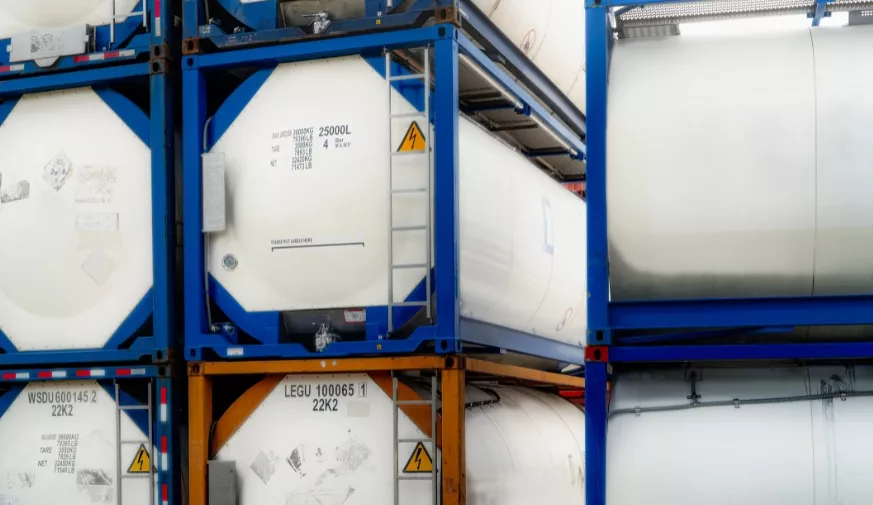
Differences in the properties of monoethanolamine and triethanolamine also translate into specific requirements for storage and logistics. MEA, as a more reactive substance and subject to ADR regulations, involves additional transport requirements — including the use of certified packaging, proper labeling, transport documentation, and handling by trained personnel.
It is important to limit exposure to moisture and air, as well as to use tightly sealed, properly selected containers. In contrast, TEA is not subject to such strict logistics requirements and can be stored under standard warehouse conditions, provided that basic safety principles are followed.