
Silica gel is available in multiple variants that differ not only in form, but primarily in how they perform under specific humidity conditions. At the structural level, the differences are significant — narrow-pore silica gel delivers higher efficiency at lower humidity levels, while wide-pore grades are better suited to environments with elevated moisture. In addition, factors such as particle size play an important role, as they influence adsorption dynamics and airflow. The presence of a moisture indicator is also relevant, enabling ongoing monitoring of the material’s saturation level during use.
From a practical standpoint, quality parameters are equally critical. Initial moisture content, mechanical strength, and batch consistency all determine how the material performs over time. These factors have a direct impact on the suitability of silica gel for different industrial applications — from environments requiring stable conditions to processes exposed to fluctuating humidity. They also influence its role within the supply chain, where the material is subject to additional stresses related to storage and transportation.

Moisture as a Risk Factor in Industrial Processes
Moisture remains one of the most frequently underestimated factors affecting the stability of raw materials and products in industrial environments. Its presence can lead to changes in physicochemical properties, including caking of bulk materials, deterioration of quality parameters, and reduced shelf life of components. In many cases, these changes are not immediate but develop gradually over time, which makes early-stage identification more challenging.
The variability of conditions in which a product operates is also a critical factor — from storage and handling to transportation, often carried out in environments with elevated humidity or significant temperature fluctuations. This is particularly relevant in international supply chains, where water vapor condensation can occur, potentially affecting the condition of the goods, even if the initial conditions were stable.
In this context, materials that help mitigate the impact of moisture become an essential component of many industrial processes. One such material is silica gel, also known as silica gel.
Different Types of Silica Gel – What Drives the Differences
Silica gel is a porous material based on silicon dioxide (SiO₂), primarily used for its moisture adsorption capacity. In practice, however, it does not function as a uniform raw material, but rather as a group of products with varying physical and performance characteristics.
These differences result from factors such as the material’s structure, its physical form, and key quality parameters, all of which directly influence its behavior under specific conditions. In the following sections, we outline the main areas of differentiation and their practical relevance in industrial applications.
Silica Gel Structure
The key functional physical property of silica gel is its porous structure. It is the material’s internal surface area, developed through a network of micropores, that determines its moisture adsorption capacity.
In industrial practice, silica gel is available as either narrow porous or wide porous material. These differences arise from the pore size distribution and directly affect how the material binds moisture, as well as the dynamics of this process.
Narrow-pore silica gel is characterized by a higher proportion of smaller pores, making it more effective at lower relative humidity levels. In contrast, wide-pore grades contain larger voids accessible to water molecules, which makes them better suited to environments with elevated humidity.
Silica Gel Particle Size
In industrial practice, silica gel is available in a range of particle size fractions, with the most common typically falling within a few millimeters, such as 2–5 mm, 3–7 mm, or 4–8 mm. These granulometries offer a balanced solution, combining sufficient surface contact with air and the ability to maintain proper airflow through the material bed.
Finer grades provide a more developed surface area in contact with the environment, which translates into faster moisture adsorption kinetics. In contrast, larger particles ensure better air permeability and greater bed stability, which is particularly important in applications requiring uniform airflow and reduced risk of caking or dust generation.
Differences in particle size have a direct impact on how the material performs under specific operating conditions, including exposure time, volume of the space, and the characteristics of the environment in which it is used.
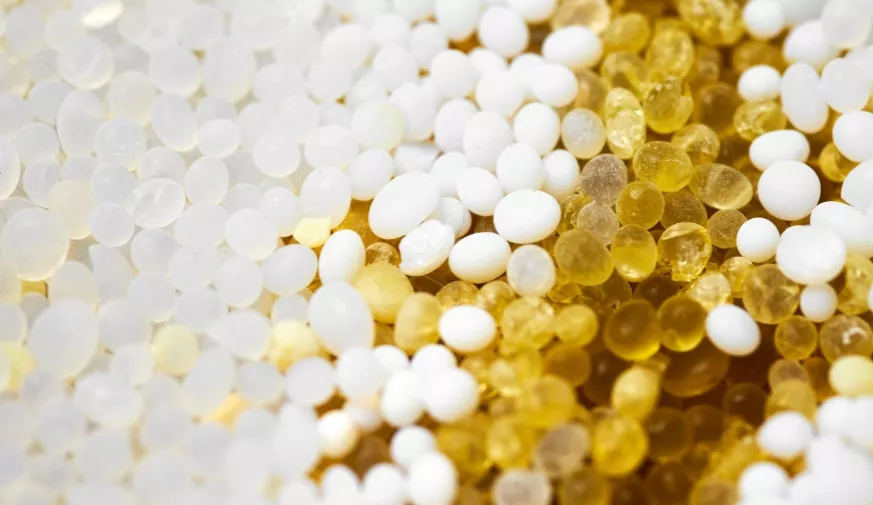
Silica Gel with Moisture Indicator
Standard silica gel is typically available in a colorless or white form, while colored variants are produced by adding a moisture indicator that enables visual assessment of the material’s saturation level.
The indicator works by changing color in response to humidity, allowing for continuous monitoring of the silica gel’s condition without the need for additional measurement tools.pomiarowych.
In industrial practice, one of the most commonly used solutions is orange silica gel, which changes color as it adsorbs moisture. After proper regeneration, it returns to its original color; however, it is worth noting that with repeated drying cycles, the color intensity may gradually decrease.
Other Relevant Parameters
From an industrial buyer’s perspective, not only the core properties of silica gel are important, but also the parameters that determine its performance in real conditions — particularly in the context of storage, transportation, and process consistency:
- initial moisture content – defines the actual adsorption capacity from the moment of application and directly affects performance at the initial stage of use
- adsorption capacity – indicates how much moisture the material can adsorb under specific conditions, directly impacting its efficiency
- mechanical strength – determines the material’s resistance to crushing and abrasion during transport, handling, and storage
- dust content (dusting) – affects process cleanliness and working conditions, particularly in systems requiring low contamination levels
- batch-to-batch consistency – is critical for process stability and predictable material performance over time
- storage stability – defines how well the material retains its properties prior to use, especially during extended storage periods

Silica Gel in Practice – Different Application Contexts
Silica gel is used across a wide range of industrial sectors, including home care chemicals, packaging, technical components manufacturing, electronics, as well as logistics and storage operations.
Different types of silica gel operate under varying conditions, depending on their structure and performance characteristics in specific humidity environments. White narrow-pore silica gel is typically used where efficiency at lower humidity levels and long-term parameter stability are required, for example in the storage of moisture-sensitive materials. In contrast, wide-pore silica gel is applied in more variable conditions, such as warehouses with limited climate control or during transportation, where the ability to perform at higher humidity levels and respond quickly to moisture increases is essential.
A separate group includes silica gels with a moisture indicator, including the commonly used orange variant, which enables ongoing assessment of the material’s saturation level. These solutions are used, among others, in closed technical spaces, protective packaging for components, and systems requiring continuous condition monitoring, where visual control and the ability to evaluate performance are essential.
Transport and Storage of Silica Gel
Silica gel is a well-established material in logistics due to its role in protecting goods from moisture during storage and transportation. At the same time, as a material itself, it is exposed to the same environmental conditions it is designed to mitigate. Although it does not require specific regulatory conditions for transport or storage, its functional properties remain highly dependent on the surrounding environment. In practice, this means that exposure to humid air can lead to partial loss of its adsorption capacity. Therefore, basic handling principles — such as using airtight packaging, limiting air exposure, and storing in dry conditions — are essential when working with silica gel.
FAQ
In What Packaging Is Silica Gel Available?
Silica gel is available in packaging formats tailored to different logistics and production needs — most commonly in 0.5 kg and 25 kg bags.
Where to Buy Silica Gel?
Centro-chem offers silica gel in both white and orange variants, in granular form. If you are looking for a reliable source of silica gel for industrial, laboratory, or logistics applications, feel free to get in touch.
Why Work with Centro-chem?
Prawie 30 lat doświadczenia w dystrybucji surowców chemicznych oznacza, że rozumiemy realne wymagania różnych branż – od precyzyjnej elektroniki, przez logistykę i magazynowanie, po wymagającą branżę spożywczą. Dlatego nie działamy schematycznie. Dopasowujemy warunki współpracy do konkretnego zastosowania – zarówno pod kątem jakości surowca, jak i opakowań, dostępności czy organizacji dostaw.