Hydroxides in household chemicals – key facts
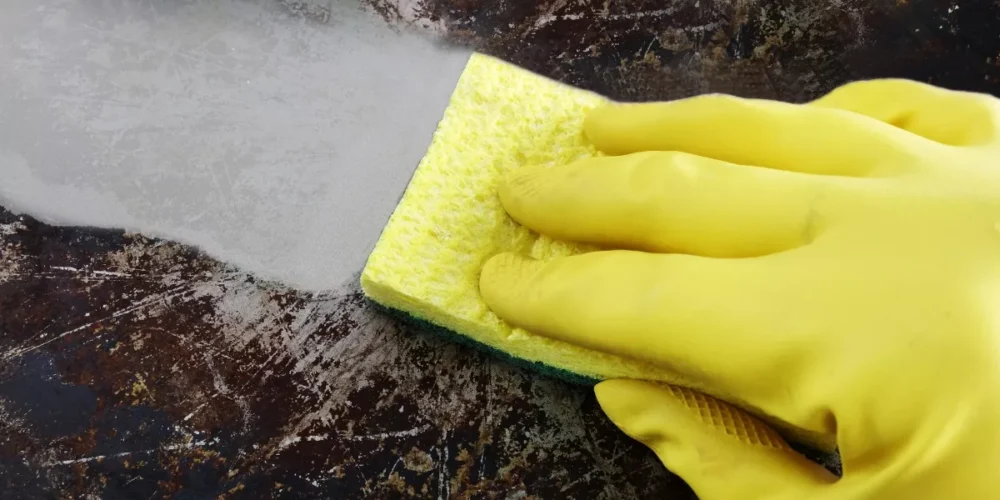
In household chemicals, hydroxides are responsible for building a high pH environment, which enhances the performance of active ingredients and improves the removal of stubborn contaminants. Unlike milder alkaline raw materials, they do not serve only a supporting function, but can actively participate in the chemical reactions taking place during the cleaning process.
Potassium hydroxide (KOH) and sodium hydroxide (NaOH) are strong bases with similar performance, but they behave differently in formulations. KOH offers higher solubility in water and is more commonly used in liquid formulations. NaOH, in turn, is more often associated with more compact or viscous product forms. Both raw materials are available in solid form as well as aqueous solutions. The chosen form affects dosing, storage, transport, and handling safety, as both hydroxides are corrosive substances and are subject to ADR regulations.
What function do hydroxides perform in household chemicals?
Hydroxides are among the strongest bases used in household chemicals. Their importance stems from both their high alkalinity and reactivity. They increase the pH of formulations, creating the conditions required for effective cleaning. At the same time, they can directly participate in chemical reactions that occur during soil removal. This combination makes hydroxides particularly effective in removing greasy contaminants and other stubborn deposits.
Difference between alkalinity and reactivity of a raw material
In formulation design, it is important to distinguish between two concepts: alkalinity and reactivity. Alkalinity refers to a raw material’s ability to increase pH, while reactivity describes its involvement in direct chemical reactions. Sodium carbonate and sodium metasilicate mainly act as supporting components – they stabilize the system and enhance cleaning performance. Hydroxides, on the other hand, not only build a high pH environment but also react with contaminants, altering their structure and facilitating their removal. This distinction makes their role in formulations more direct and process-oriented.
Potassium hydroxide and sodium hydroxide – two key raw materials within the same group
In household chemical applications, two hydroxides are of particular importance: sodium hydroxide and potassium hydroxide. Both are widely used in cleaning formulations; however, their role in the production process is associated with slightly different performance characteristics. Therefore, despite belonging to the same group of compounds, it is worth considering them in terms of both similarities and differences.
Chemical similarities and high alkalinity
Potassium hydroxide and sodium hydroxide belong to the same group of strong inorganic bases, which is why they perform similar functions in cleaning formulations. When dissolved in water, they rapidly dissociate into hydroxide ions (OH⁻), which are responsible for their reactivity. These ions take part in chemical reactions with soil components, particularly fats.
In practice, this means a saponification process, i.e. the breakdown of fats (esters) into glycerol and fatty acid salts. The compounds formed in this reaction exhibit surface-active properties, allowing them to detach more easily from the cleaned surface and be rinsed away with water.
Differences in formulation behavior
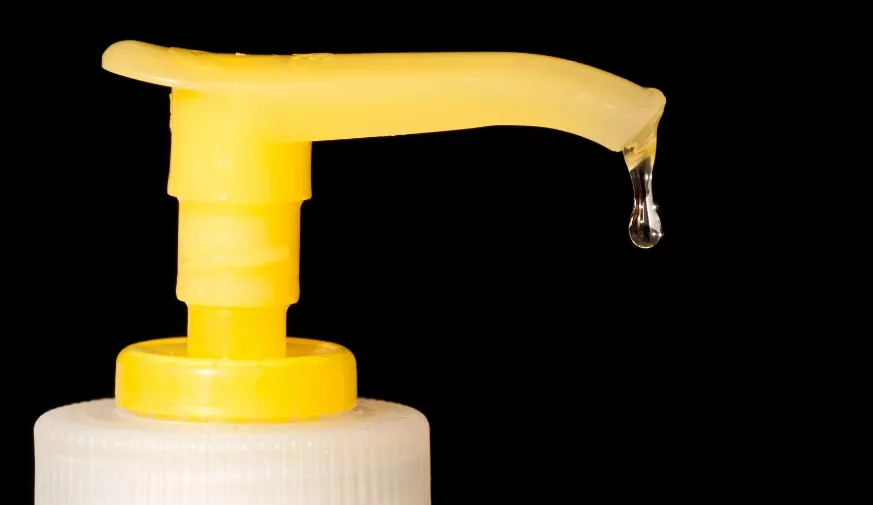
Although sodium hydroxide and potassium hydroxide exhibit similar chemical activity, in practice they do not always play exactly the same role. The difference lies not in their strength, but in their physicochemical properties. Potassium hydroxide has higher solubility in water, which makes it well suited for liquid formulations and supports the creation of homogeneous systems, such as liquid soaps. Sodium hydroxide, on the other hand, is more commonly associated with more compact or viscous products, such as drain cleaners.
The form of the raw material matters – solid vs solution
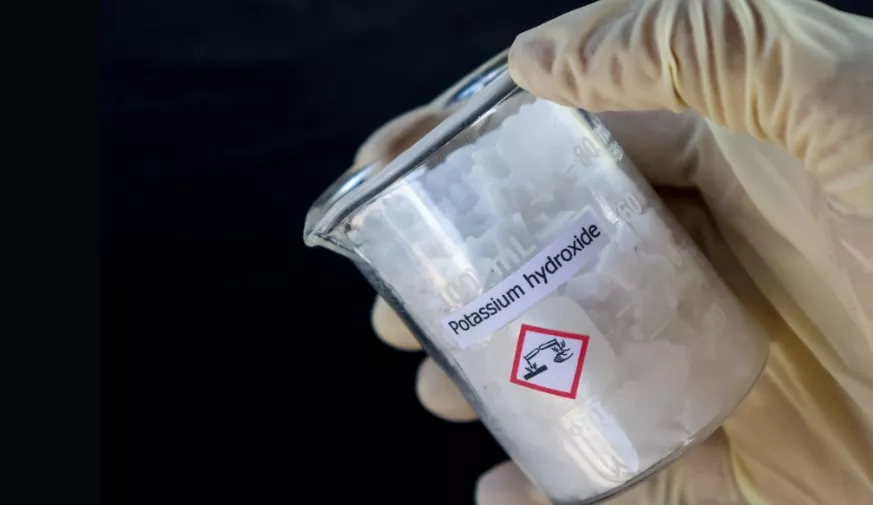
Sodium hydroxide and potassium hydroxide share not only a similar chemical nature, but also availability in different commercial forms. Both raw materials are offered in solid form as well as aqueous solutions, allowing them to be tailored to specific production requirements.
Hydroxides in solid form – applications and logistics
In practice, solid potassium hydroxide is most commonly available in flake form, while sodium hydroxide is typically supplied as granules or pearls. This difference results from their physical properties – potassium hydroxide is more hygroscopic, making it more difficult to maintain in a compact form. In operational terms, this affects storage conditions and handling procedures.
Potassium hydroxide flakes dissolve more quickly and come into contact with water more easily, while sodium hydroxide granules allow for more controlled and stable dosing. Both forms require protection from moisture; however, potassium hydroxide is more sensitive in this respect, which is important for logistics and storage conditions.
Aqueous solutions – safety and ease of dosing
Aqueous solutions of sodium hydroxide and potassium hydroxide represent an important operational form of these raw materials in production processes. In practice, potassium hydroxide solution is most commonly used as potassium hydroxide solution, typically at a concentration of around 50%, while sodium hydroxide solution, referred to as sodium hydroxide solution, is available in a range of concentrations, most often between 10% and 50%.
This form does not require additional dissolution, which facilitates precise dosing and improves process consistency. At the same time, it reduces exposure to dust or fine solid particles, enhancing both operational comfort and workplace safety.
Transport of hydroxides
Both sodium hydroxide and potassium hydroxide are subject to ADR regulations for the transport of dangerous goods and are classified as corrosive substances. In practice, this means they must be properly packaged, labeled, and handled in accordance with specific transport requirements. This applies to both solid forms and aqueous solutions.