Hard water damages industrial systems slowly but effectively. Calcium and magnesium deposits reduce the efficiency of heat exchangers, cause boiler failures, and lead to costly downtime. Ion exchange water softening addresses this issue—provided that the resin bed is regularly regenerated with sodium chloride. Below, we outline which type of salt performs best and what to consider when purchasing it.
Hard water in industrial systems – the scale of the problem
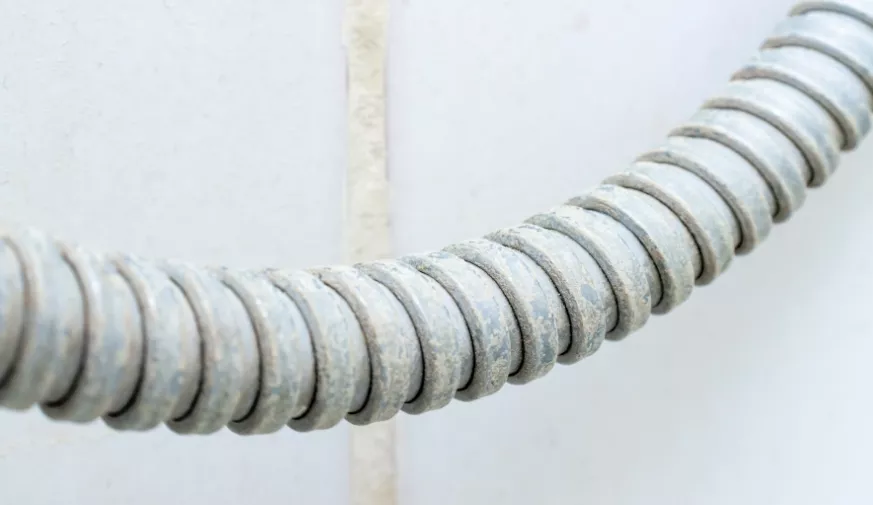
Boiler scale does not form overnight—but in heating systems operating above 60°C, even moderate water hardness (7–14 °dH) can lead to visible deposits within a few months. A scale layer as thin as 1 mm on a heat exchanger surface increases thermal resistance by around 10%, directly resulting in higher energy consumption. In steam boilers, the same deposit layer can cause local overheating of the walls and cracking.
What is ion exchange water softening?
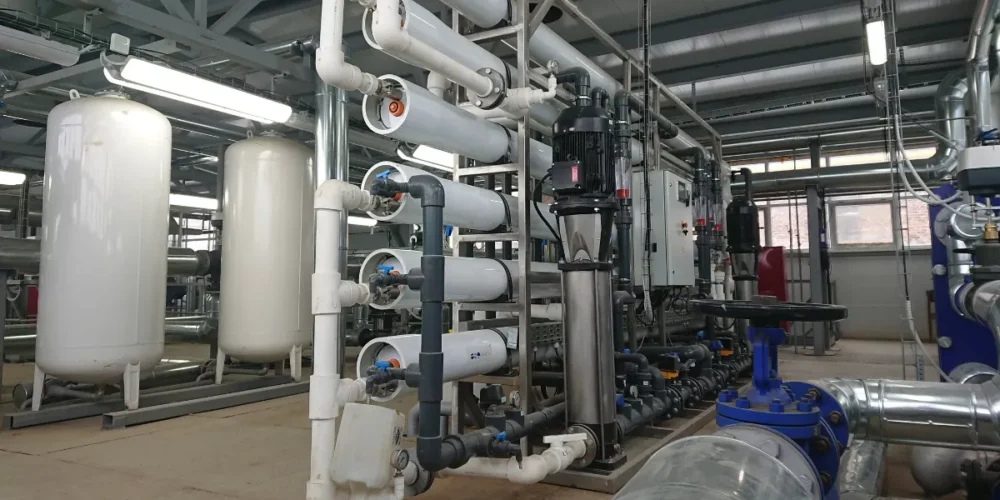
A water softener contains a cation exchange resin bed saturated with sodium ions. As water flows through the bed, calcium and magnesium ions bind to the resin, while Na⁺ ions are released into the water. These ions are chemically inert in the system and do not form hard scale deposits.
The resin bed has a limited working capacity. Once it is exhausted, it can no longer effectively capture hardness ions, and the softener must be regenerated using a brine solution—i.e. a saturated sodium chloride solution. The salt displaces Ca²⁺ and Mg²⁺ ions from the resin, restoring it to the sodium form so it can operate again.
The regeneration frequency depends on the operating conditions of the installation. In practice, it is mainly influenced by incoming water hardness, water consumption, and resin bed capacity.
Tablet salt – why is it the industrial standard?
Sodium chloride used for resin regeneration is available in several forms: granules, tablets, and blocks. In industrial installations, tablets are often the preferred choice—and not by accident.
Salt tablets have a uniform density and consistent dimensions, which supports more predictable dissolution in the brine tank. Granular salt, with its irregular particle size, may cake or create channeling effects, allowing brine to bypass parts of the resin bed. As a result, sections of the resin may remain unregenerated, leading to reduced water quality at the outlet.
From a logistics and storage perspective, tablets are also more convenient: they are dust-free, easy to handle, and a 25 kg bag occupies a consistent and predictable volume. In systems with automatic brine dosing, tablets simplify handling and refilling of the salt reservoir.

Key quality parameters to consider when purchasing salt tablets
In water treatment systems, not only the product form matters, but also its quality parameters. In practice, the most important factors include high NaCl purity, low moisture content, and a minimal level of insoluble matter and other impurities. These characteristics support stable system performance and predictable brine preparation.
Mechanical strength of the tablets is also important. A product that maintains its shape during transport and storage is easier to handle and reduces the formation of fines. For this reason, when purchasing water softening salt, it is worth considering not only the price, but also the quality and consistency of product parameters.
Continuity of sodium chloride supply as a factor in system reliability
Even a well-designed installation will not operate reliably without regular resin regeneration. If salt is not available at the right time, the system loses its ability to maintain proper water parameters. As a result, the risk increases of deteriorated outlet water quality and higher stress on equipment operating within the system. For this reason, in industrial practice, not only the product itself matters, but also the certainty of its availability.
From a plant perspective, this means the need to cooperate with a supplier that ensures efficient logistics and predictable order handling. What matters is not only price, but also stock availability, on-time delivery, and the ability to align supply with the operating rhythm of the installation. In cases of higher process water consumption, well-planned procurement helps reduce the risk of disruptions and better secures process continuity.