From discovery to industry – a brief history of formalin
Formaldehyde, also known as methanal, was first described in the 19th century during its synthesis from methanol. Initially, it found application in medicine as a preservative for tissue fixation and biological specimens. However, it soon became clear that its aqueous solution—formalin—could play a significant role in industrial applications.
As early as the beginning of the 20th century, research into its polymerisation began, leading to the development of the first synthetic resins. These materials paved the way for modern furniture manufacturing and construction, enabling the production of particle boards and durable adhesives. Over time, this substance became the foundation of an entire chain of innovation in plastics.
Technical formalin – definition, properties and characteristics
Technical formalin is an aqueous solution of formaldehyde, stabilised with methanol, which allows it to be safely stored and transported. Unlike pure formaldehyde—a gas that is difficult to handle in practice—formalin is a convenient raw material widely used in industrial processes.
Thanks to stabilisation, it retains its properties over time, enabling companies to use it at scale without concerns about unwanted changes during storage.

Polymerisation of technical formalin – the essence of the process
Technical formalin is valued in industry primarily for its ability to undergo polymerisation. The polymerisation of formalin leads to the formation of paraformaldehyde—a crystalline product with wide relevance in materials chemistry. This process involves the formation of bonds between formaldehyde molecules, enabling the creation of stable structures used in further synthesis.
Today, polymerisation plays a key role not only in maintaining the continuity of synthetic resin production but also in developing new plastics with improved resistance to moisture, high temperatures, and abrasion. As a result, technical formalin remains a crucial starting point in the development of materials that meet the evolving demands of modern industry.
Applications of formalin-based resins
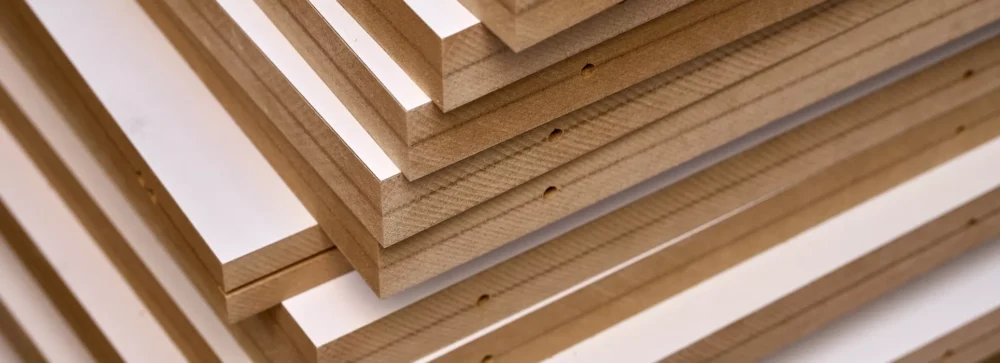
Formaldehyde resins (e.g. urea-formaldehyde and phenol-formaldehyde), derived from formalin, have been the primary adhesives used for decades in the production of wood-based panels—such as particle boards, MDF, and plywood. They enhance durability and mechanical strength, which is crucial in furniture manufacturing and construction. This compound is also used in high-performance plastics applied in products such as kitchen countertops, insulation materials, and plastic components. In the chemical industry, it serves as an ingredient in coatings, dyes, and protective finishes, further highlighting its versatile role across industrial applications.
The future of formalin in materials chemistry
At present, the future of technical formalin is still largely shaped by its use in furniture and construction materials, where synthetic resins play a key role. However, the direction of development is increasingly driven by technologies that reduce formaldehyde emissions and improve safety in use.
As a result, new plastics and composites are being developed with greater resistance to external factors and degradation, while also meeting increasingly stringent quality and environmental standards.
Looking for a reliable supplier of technical formalin? Fill out the quick quote form – we’ll respond within 24 hours.
Search for raw material
Polimeryzacja formaliny – najważniejsze fakty
Formalin is an aqueous solution of formaldehyde, typically stabilised with methanol. This makes it easier to store and transport, and widely used in industrial applications.
Its primary application is in the production of synthetic resins, which form the basis of wood-based panels, laminates, and modern plastics used in furniture manufacturing and construction.
Polymerisation is the process of linking formaldehyde molecules into more stable structures, such as paraformaldehyde. This results in intermediates used in the synthesis of resins and materials with enhanced performance properties.
Yes. Despite its more than century-long history, technical formalin remains an important raw material for the wood, construction, and materials chemistry industries. Its role continues to evolve alongside technological advancements and changing market demands.
Current innovations focus on reducing formaldehyde emissions and improving process safety. This enables the development of resins and plastics that are both more durable and more environmentally friendly.
Technical formalin of industrial grade can be sourced from specialised distributors of chemical raw materials. At Centro-Chem, we offer this raw material with full logistics support and timely deliveries.